
Why I respond to layered architecture
I’ve always been drawn to buildings that feel like they’ve been shaped over time rather than designed in a single moment.
Spaces where you don’t understand everything at once—where movement is required, and the architecture reveals itself gradually.
Historic country houses, Gothic Revival estates like Alton Towers, and evolved manor houses share this quality. They are not static compositions, but layered systems—formed through extension, adaptation, and changing eras of use.
What interests me is not style in isolation, but architecture as accumulation:
rooms that don’t align perfectly but connect meaningfully
corridors that shift perception rather than simply connect points
materials that weather and record time
spaces that feel slightly irregular, but intentionally so
I’m particularly drawn to buildings that integrate landscape and structure—where the experience is sequential, and the design unfolds as you move through it.
There is a kind of theatre in this type of architecture. Not performance in the literal sense, but spatial storytelling: compression and release, concealment and reveal, stillness and openness.
This way of reading space informs my design approach. I’m interested in how interiors can feel less like fixed objects, and more like environments that carry memory, depth, and subtle variation—spaces that feel lived, even when newly made.
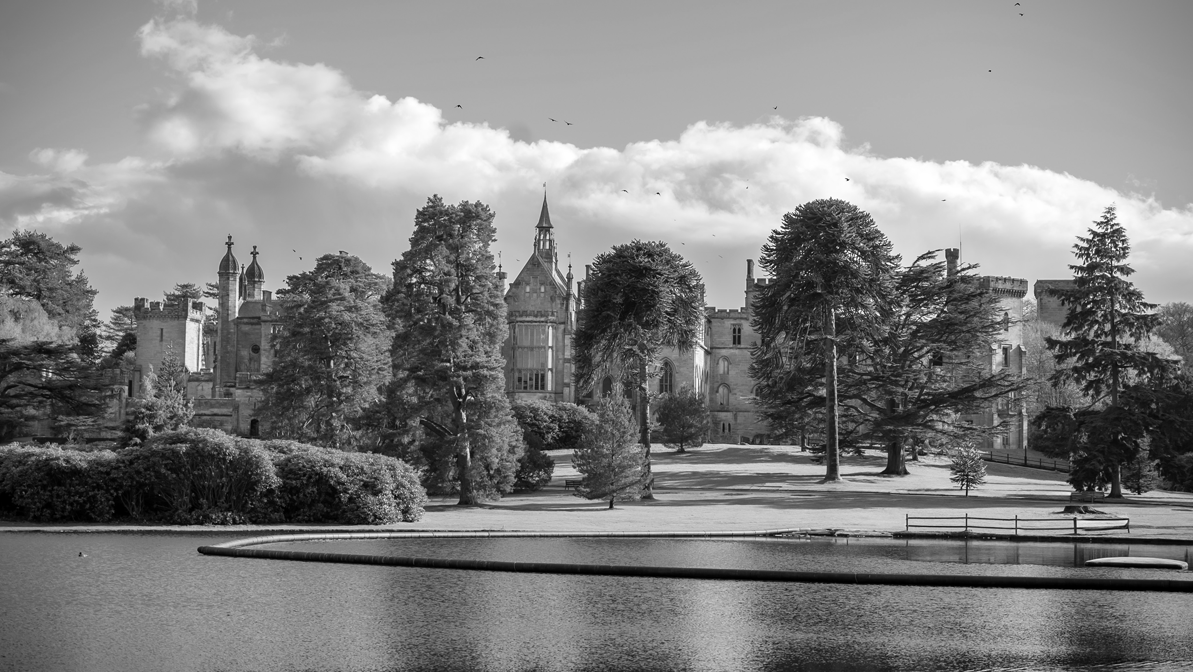
Alton Towers, Staffordshire.